Keizer is the most "lawn" town we work in. It's flat, the lots are generous, and a lot of the houses are 1960s and 70s ranches with front yards that are mostly grass and a foundation bed. That makes Keizer the heart of our weekly mowing routes — and it shapes what Keizer yards need.
Big, flat lawns
On a flat lot, mowing stripes show everything: scalped spots, a dull blade, the corner that always gets missed. Keizer lawns are also where we see the most summer stress. Grass on a big, sunny, unshaded lot dries out fast, and many older irrigation systems here were laid out decades ago for a different garden. We spend a lot of spring visits re-aiming heads and fixing zones that water the driveway more than the lawn.
River-bottom soil near the Willamette
Closer to the river — around Keizer Rapids Park and the west side of River Road — the soil is lighter and drains better than the heavy clay most of the valley has. That's good news for lawns and roses, but it means beds dry out faster in July. Mulch matters more here than it does in South Salem, and drip irrigation in the beds pays for itself.
The Iris Festival effect
Keizer takes its gardens seriously — the iris has been the city's flower for decades, and every May the Iris Festival has half the town looking at its front beds. Spring is when we get asked to re-cut bed lines, divide crowded perennials and freshen mulch, usually with a deadline.
Mature hedges and trees
Older Keizer neighborhoods like Clear Lake and the streets around McNary Golf Club have mature laurel and arborvitae hedges that have outgrown their spot. Renovation pruning over two seasons brings them back without leaving bare walls of brown.
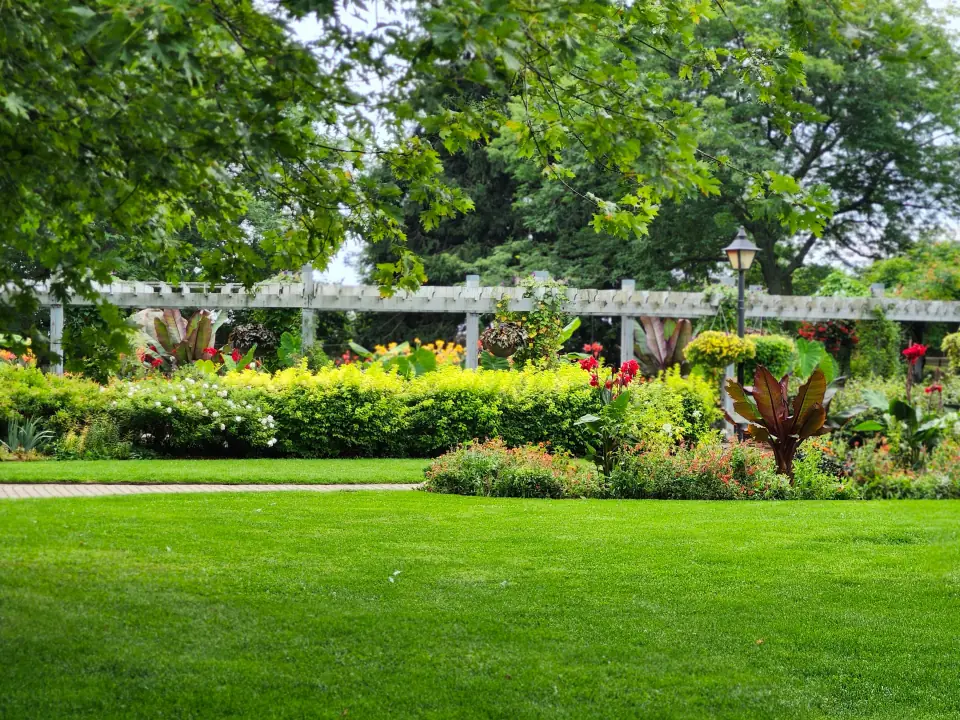
The pergola garden we look after in Keizer is a good example of a Keizer yard done well: a striped formal lawn, layered borders, and beds re-edged so the lawn and garden meet in one clean line.