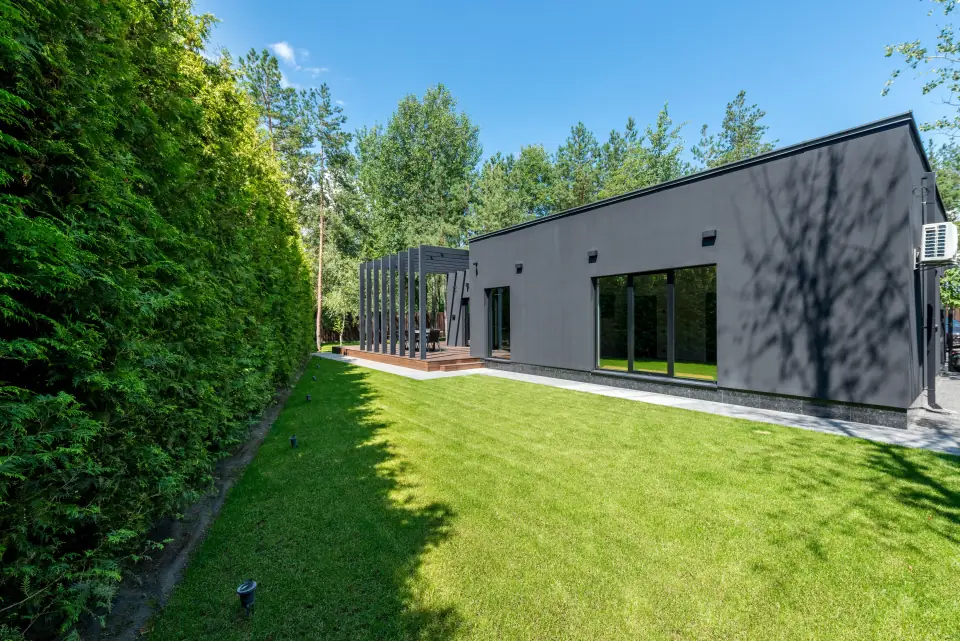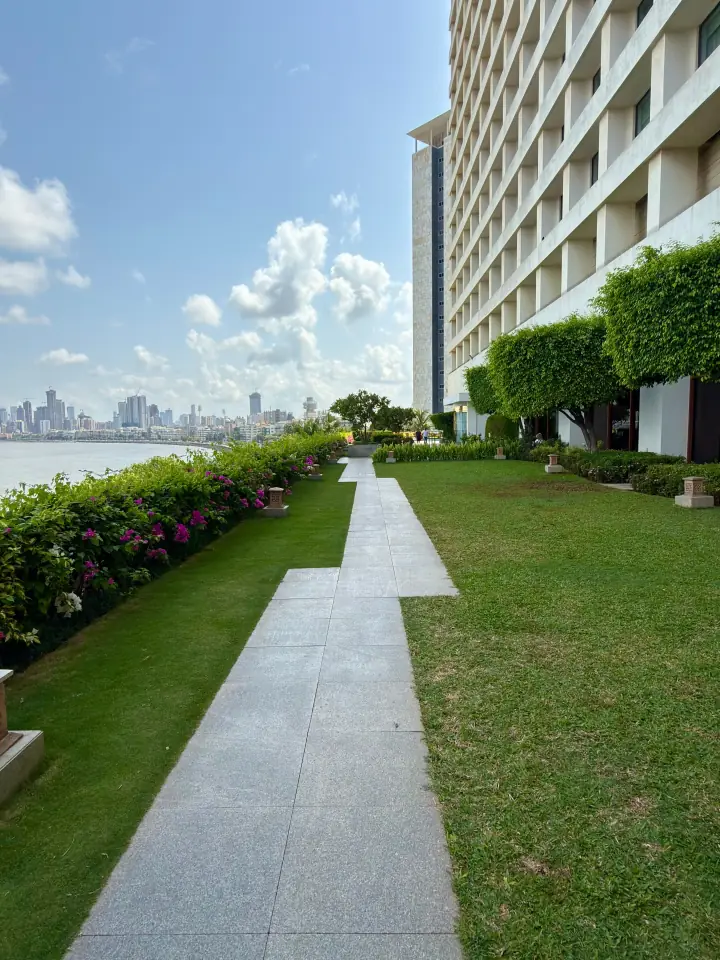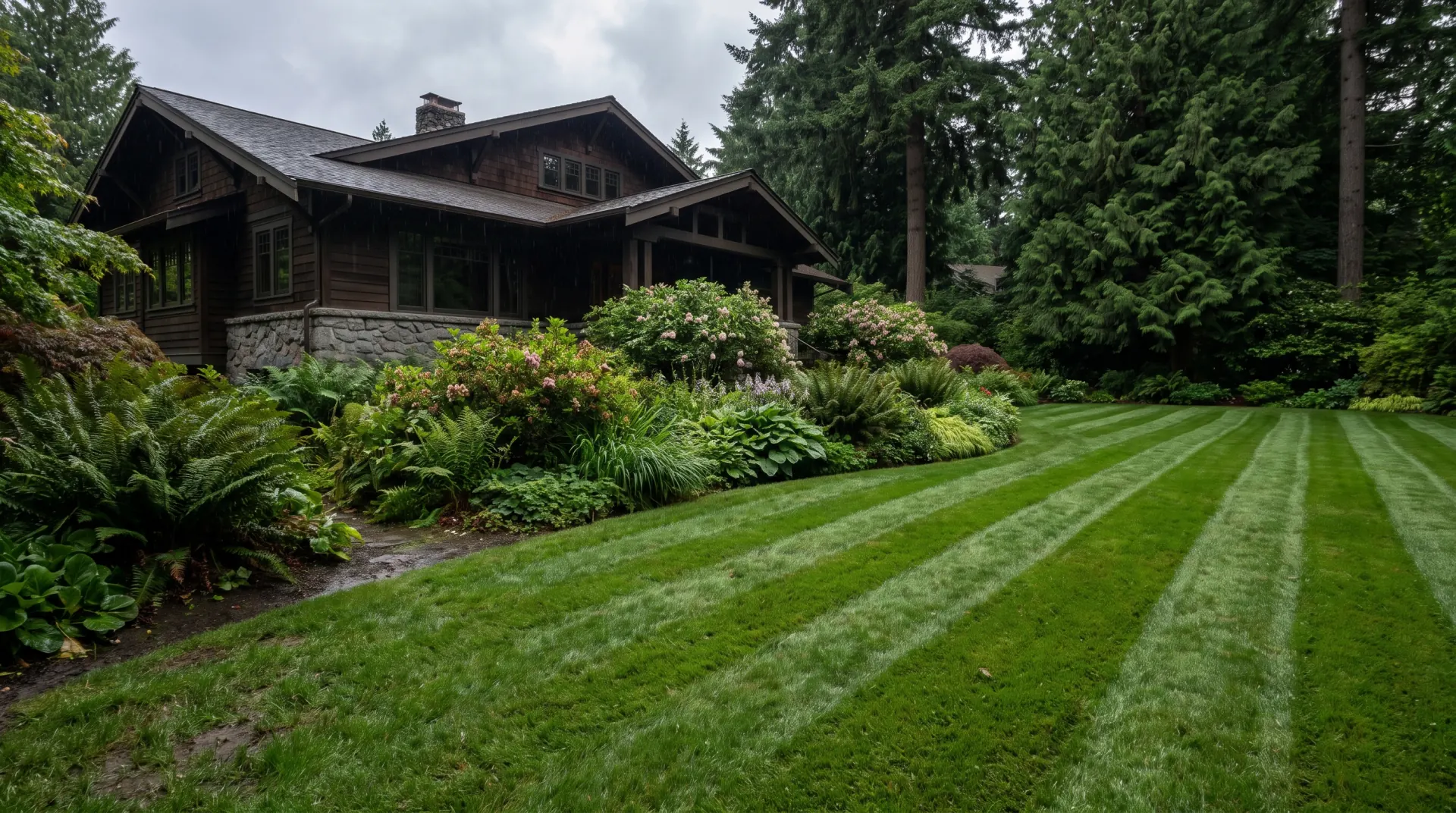
Salem is home. Our yard is off Commercial Street in South Salem, and most of our weekly care routes run within a few miles of it. That means we know the town's yards by type, not just by address — and Salem has a few very different ones.
Hillside lots in South Salem and Sunnyslope
The hills south of downtown are where Salem's red Jory soil shows up: deep, well-drained and great for trees, but it bakes hard in August and erodes fast on a slope once the turf is thin. On these lots we lean on terracing, deep-rooted ground covers and drip lines rather than more lawn. Mowing routes here take longer than the map suggests — steep side yards need walk-behind mowers and a lot of string-trimming.
Older yards near downtown, Morningside and Faye Wright
Mid-century houses, mature oaks and maples, and lawns that have been patched for fifty years. The usual jobs are renovation: thinning overgrown shrubs, re-cutting bed lines that have disappeared, and replacing a tired lawn where the canopy has grown over it. Shade under big trees is the most common reason a Salem lawn struggles; sometimes the right answer is a shade-tolerant fine-fescue blend, sometimes it is a mulched bed instead of grass.
West Salem, across the river
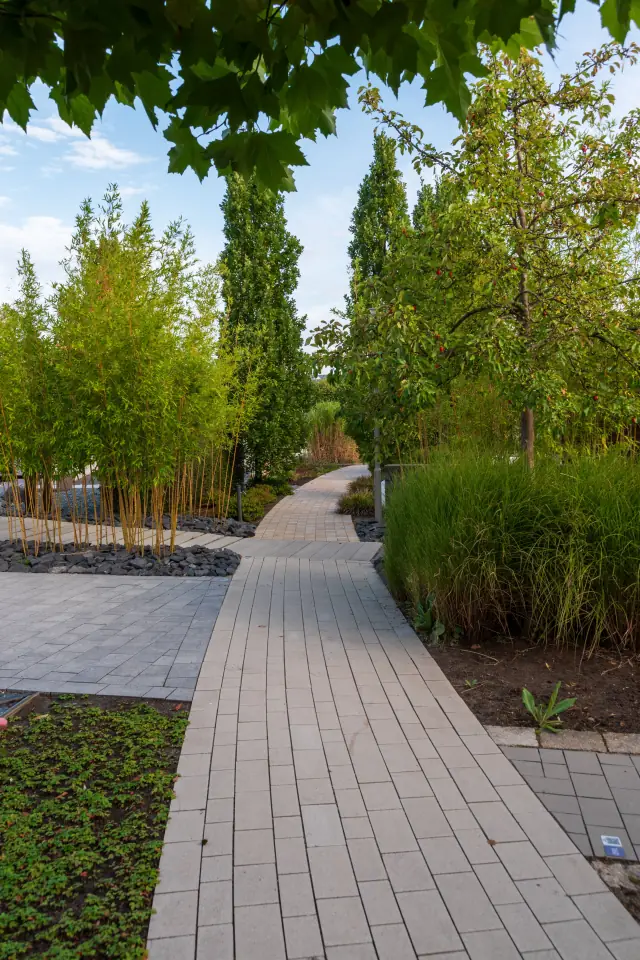
West Salem sits in Polk County, with newer subdivisions on the hills and heavier clay in the flats. New-build lots there often come with a few inches of topsoil over compacted fill, which is why so many of our sod installs are in West Salem: we regrade, amend and lay sod so the lawn has a chance. The paver garden walk we built there replaced a muddy shortcut that had defeated three attempts at grass.
What Salem yards need through the year
Spring is moss and aeration season — our wet winters leave moss in every shady lawn in town. Summer is about watering properly or letting the lawn go dormant on purpose, not half-way. Fall is the busiest season we have: aeration, overseeding, leaf cleanups and getting irrigation blown out before the first freeze.