Corvallis is about forty minutes south of our Salem yard, so we don't run weekly mowing routes there. What we do in Corvallis is projects: patios and walks, new planting, and irrigation — work that's worth the drive and that we schedule in blocks so the crew is there several days in a row.
Deer in the hills
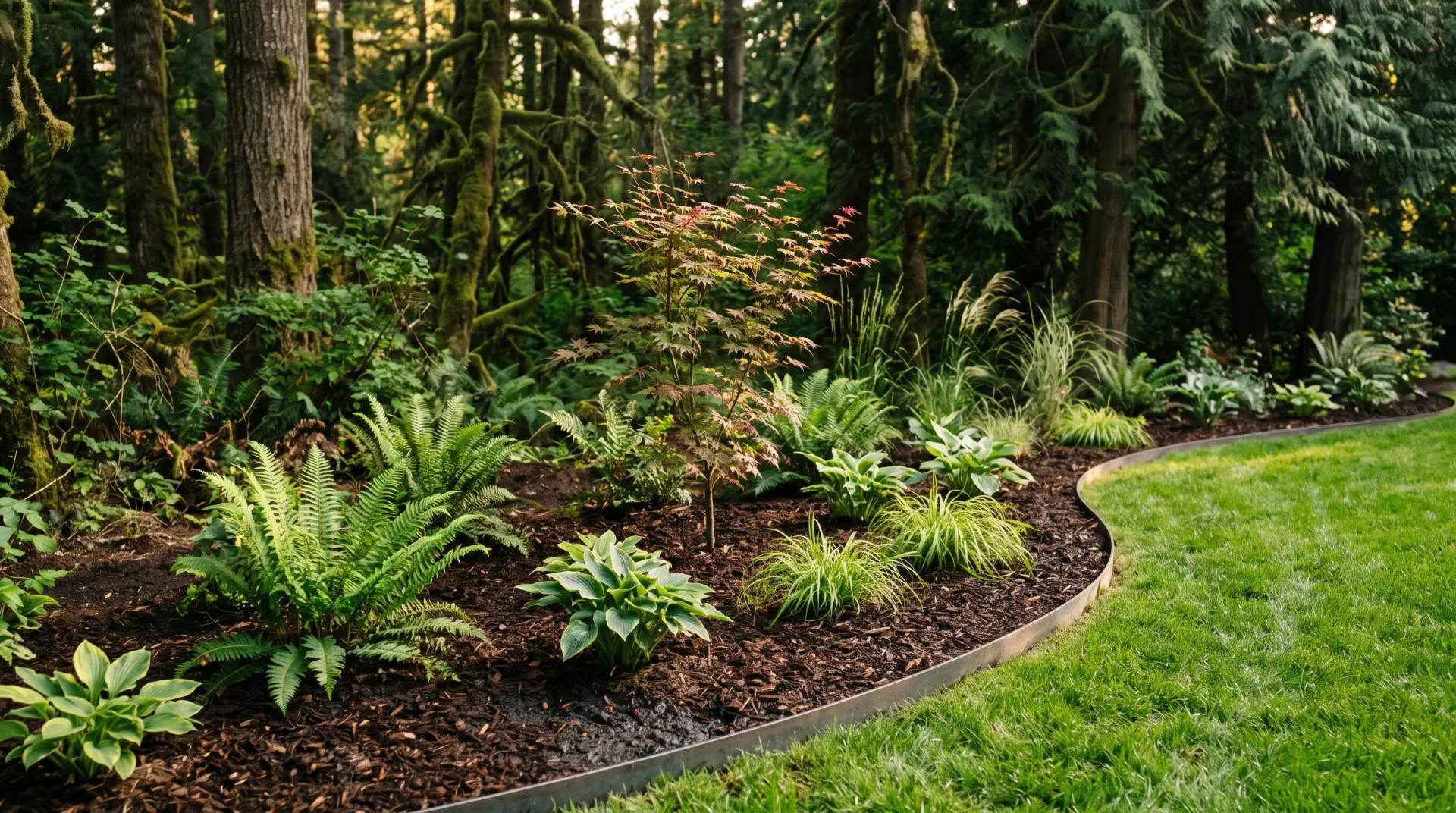
If you live in Timberhill, Witham Hill or the hills on the northwest side of town, you already know: deer eat gardens. Planting plans for these neighborhoods start from what deer leave alone — lavender, rosemary, ornamental grasses, barberry, Oregon grape, most ferns — and we put anything tasty, like hostas or roses, inside a fenced or close-to-the-house zone. Replacing a deer-browsed border with plants that survive is one of the most common Corvallis jobs we do.
Slopes and runoff
Hillside lots in the north and west of town shed a lot of water in winter. Patios and walks here are built with drainage first: a gravel trench or drain line along the uphill edge, and steps or low walls to break up the grade. Planting on the slope itself is chosen for roots that hold soil, not for lawn.
Clay in South Corvallis
The flatter ground in South Corvallis and near the Marys River is heavy clay. Lawns there stay wet into May, and new trees sulk if they're planted in a hole that holds water like a bucket. We plant high, amend wide rather than deep, and often recommend drip irrigation in place of overhead sprinklers so beds get water without the lawn getting soggier.
Campus-area rentals and small lots
Around College Hill and close to Oregon State, many yards are small rentals or older homes with very little outdoor space. Low-maintenance planting, a small paver patio and a single drip zone go a long way, and they're what landlords ask us for most.
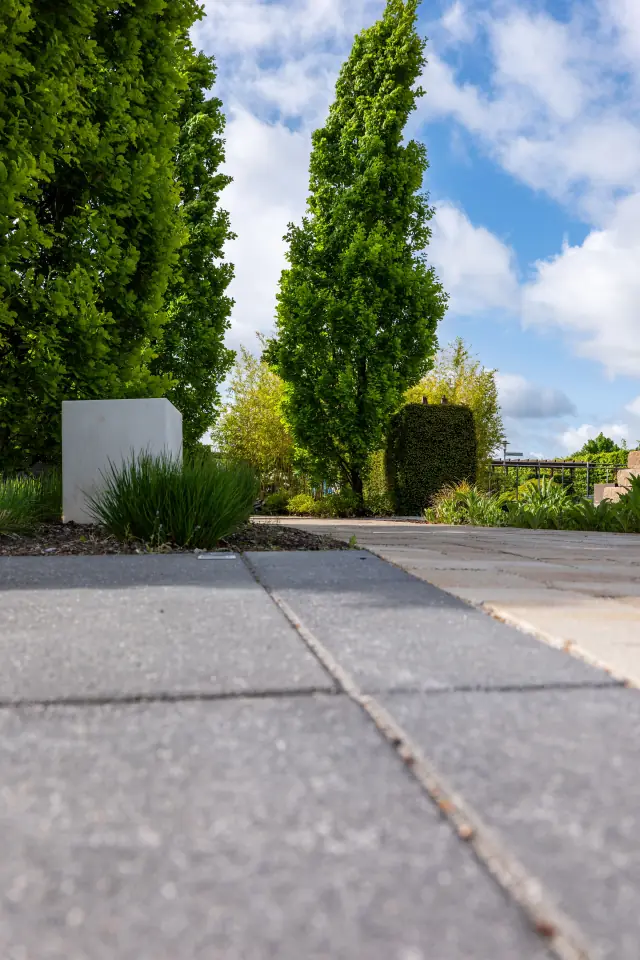
The courtyard paver plaza on a Corvallis office campus shows the approach: large-format pavers on a permeable base laid around existing columnar oaks, with low-water borders on their own smart irrigation zone.