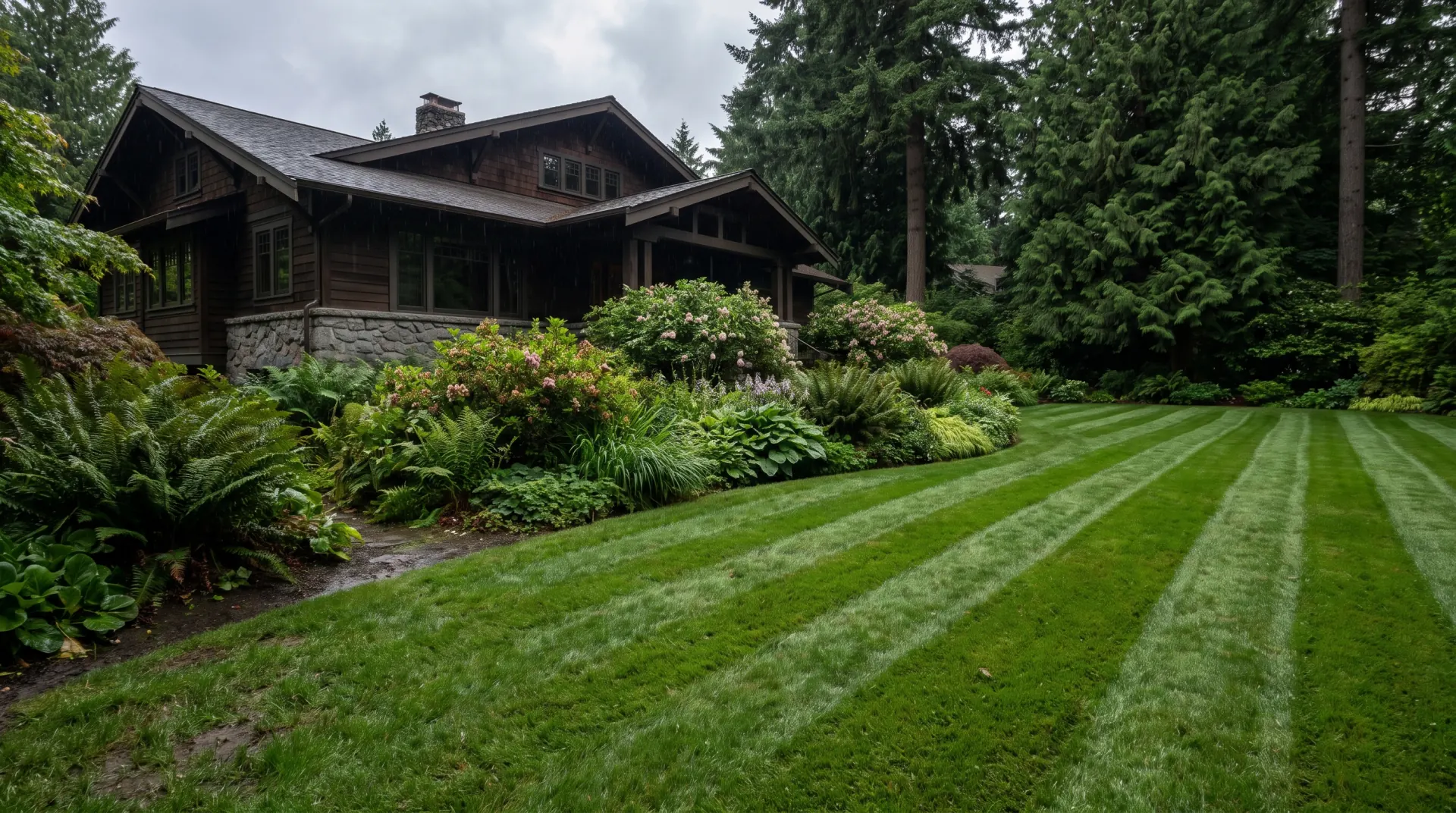
Most lawns in the Willamette Valley are cool-season grass: tall fescue, perennial ryegrass and fine fescues. They do their real growing in spring and fall, sit out the dry summer and stall in the cold, wet months. Aeration works best when the grass can recover fast, so the timing follows that calendar.
The short answer
Early fall — mid-September to mid-October — is the best time to aerate in the Pacific Northwest. The first fall rains have softened the soil, it's still warm enough for roots to grow, and weed pressure is low. If you're also overseeding, this is the window to do both.
Mid-spring — April into May — is the second-best time. The soil is moist and the grass is growing, but you'll be competing with crabgrass and other weeds that germinate in the same open holes. Spring works well for a lawn that missed its fall aeration or is badly compacted.
Avoid:
- July and August. Without irrigation, valley lawns go dormant in summer. Pulling cores out of dry, hard ground stresses the grass and the holes stay open with nothing to fill them.
- November through February. The ground is cold and often waterlogged. Machines tear up saturated turf, and the grass can't grow back into the holes until spring.
Does your lawn actually need it?
Not every lawn needs aerating every year. Look for these signs:
- Water pools or runs off after rain instead of soaking in. On our heavy valley clay this is the most common sign.
- The screwdriver test fails. Push a long screwdriver into moist soil. If it won't go in past two or three inches without a fight, the soil is compacted.
- Thin, tired turf in high-traffic areas: the dog run, the path to the shed, the strip where the kids play.
- Thatch thicker than half an inch. Cut out a small wedge of lawn; a spongy brown layer between the green blades and the soil is thatch.
- Moss creeping in. Moss loves compacted, poorly drained, shady soil. Aeration doesn't kill moss, but it fixes one of the reasons it's winning.
As a rule of thumb, aerate high-traffic lawns on clay soil every year, and healthy lawns on looser soil every two to three years.
Core aeration, not spikes
Use a core aerator, the machine that pulls out plugs of soil about the size of your finger. Spike aerators just punch holes and push the soil sideways, which can make compaction worse around each hole.
Leave the cores on the lawn. They break down in a week or two of rain and mowing and return the topsoil and microbes to the surface.
Get the most out of it
- Mow a little shorter than usual (about 2.5 inches) the week before, so the machine reaches the soil.
- Aerate when the soil is moist, not soggy. A day or two after a good rain is ideal. If the lawn squelches, wait.
- Mark sprinkler heads and shallow irrigation lines before the machine goes over them.
- Overseed right after aerating in fall. The seed falls into the holes, where it's protected and in contact with soil. Use a seed blend suited to the valley; most local blends are tall fescue or perennial rye.
- Feed and water. A fall fertilizer after aeration helps the roots fill in before winter. If the rains haven't started, water lightly every day or two until the new seed is up.
How this fits into a year of lawn care
In our care plans, aeration sits alongside the rest of the season:
| When | What |
|---|---|
| March–April | First mow, spring feeding, moss and weed spot treatment |
| April–May | Spring aeration for compacted lawns |
| June–August | Mow higher (3–3.5 in), water deeply or let the lawn go dormant |
| September–October | Core aeration, overseeding, fall feeding |
| November | Final mow, leaf cleanup so the grass isn't smothered over winter |
If your lawn is more bare soil and moss than grass, aerating and overseeding may not be enough. That's when new sod is worth pricing: it gives you a finished lawn in a day instead of a season of waiting for seed.
Want us to aerate and overseed this fall? We'll walk the lawn, do the screwdriver test with you and tell you honestly whether it needs it. Get a quote.