"How much is a patio?" is the question we hear most, and the honest answer is: it depends on what's under it. The pavers you see are often less than half the cost. Here's what goes into the price, with typical ranges for Willamette Valley projects so you can budget before anyone comes out.
Typical installed prices*
| Patio type | Per square foot, installed |
|---|---|
| Standard concrete pavers | $18–$28 |
| Premium / large-format concrete pavers | $25–$38 |
| Natural flagstone on a compacted base | $28–$45 |
| Natural stone set in mortar on a concrete slab | $40–$60+ |
*Ballpark ranges for straightforward sites in the mid-valley. Every yard is different: these are for budgeting, not a quote.
For a sense of scale, a 12 × 16 ft patio (about 190 sq ft) in standard concrete pavers usually lands somewhere around $3,500 to $5,500. The same patio in natural flagstone might be $5,500 to $8,500.
What drives the price
1. The base
A paver patio is only as good as the gravel underneath it. We excavate 7 to 10 inches, lay geotextile fabric on our clay soils, and compact 6 inches or more of crushed rock in layers before a bed of bedding sand. That base is what stops pavers from heaving, sinking or rocking after a few wet winters. It is also the first place a cheap quote saves money.
2. Drainage
Valley clay doesn't drain. The patio has to slope away from the house (about a quarter inch per foot), and some sites need a drain line or a gravel trench at the low edge. Water problems are much cheaper to solve before the patio goes in than after.
3. Access and excavation
If a skid steer can drive into the backyard, digging takes hours. If everything has to go through a 36-inch gate in a wheelbarrow, it takes days. Haul-away of the dug soil is part of the price too.
4. Shape and pattern
Rectangles with a running-bond or stack pattern are the most efficient. Curves, herringbone, borders and inlays all mean more cuts and more labor. They often look worth it, but they add 10–25%.
5. Extras
- Steps and changes in level
- Seat walls and retaining walls. In many cities, walls over about 4 feet need engineering and a permit; check with your city.
- Lighting: it's much easier to run conduit before the pavers go down.
- Fire pit inserts and kits
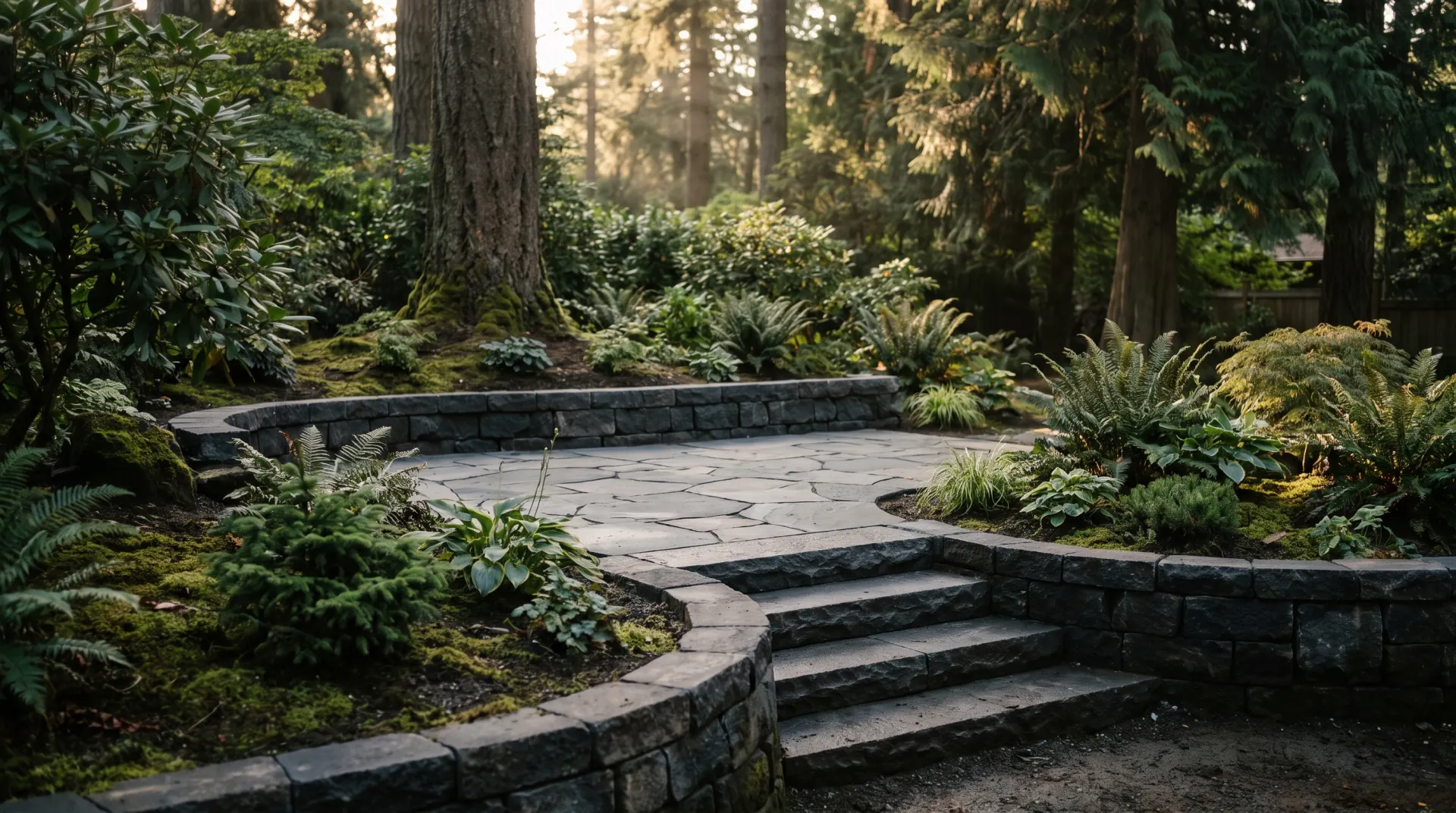
- Planting around the edges to soften the hardscape and make it feel finished
Pavers vs a poured concrete patio
Poured concrete usually costs less up front. But it cracks as the ground moves, and a cracked slab can't really be repaired. Pavers flex with the ground, and a sunken or stained section can be lifted and relaid. On our freeze-thaw winters and shrink-swell clay soils, we think pavers are the better long-term value.
How to compare quotes
When quotes for the same patio are thousands of dollars apart, the difference is usually below the surface. Ask every contractor:
- How deep is the base, and is it compacted in lifts? (You want 6 inches or more of crushed rock for a patio, more for a driveway.)
- Is geotextile fabric included?
- What edge restraint do you use? (Concrete or a buried edge restraint, not just soil.)
- What joint sand? (Polymeric sand resists weeds and ants better than plain sand.)
- What's included for drainage, haul-away and cleanup?
- What's the warranty on settling?
A good contractor will answer all of these in writing.
Planning tips
- Size it for the furniture. A dining table for six needs about 12 × 12 ft; a lounge area with a sectional needs more than you'd think. Lay it out with a hose or string first.
- Build in the dry season. In the valley, July through September is ideal; we can work into the fall, but rain slows excavation and compaction.
- Think about the borders. A ring of planting beds is what makes a patio look like it was always there.
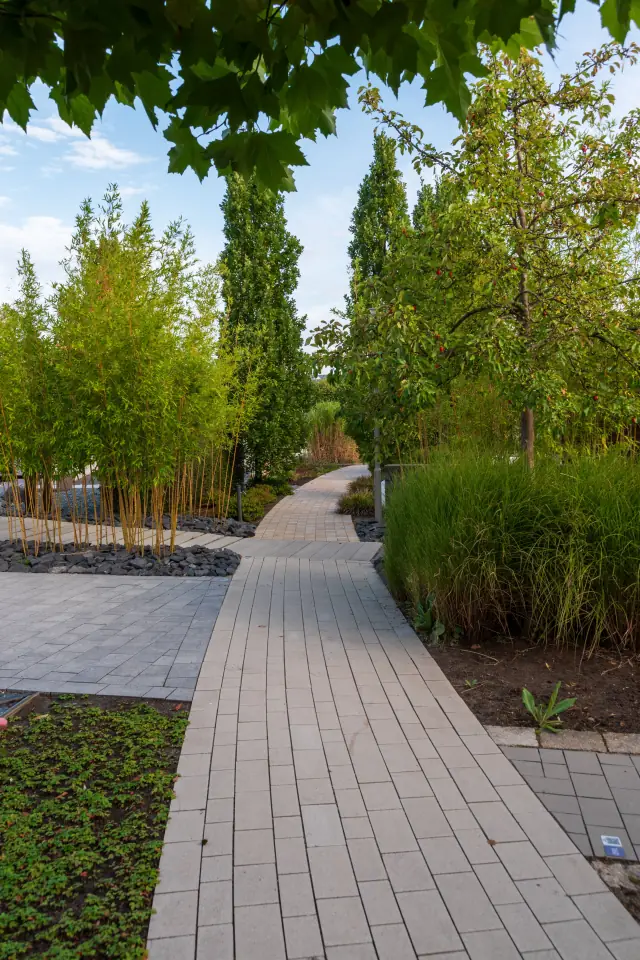
Ready to price yours? We'll measure, check drainage and access, and give you a clear, line-item quote. Get a quote, see our hardscaping work, or look at the paver garden walk we built in West Salem.