The Willamette Valley grows much of the country's grass seed, so you'd think seeding would be the obvious choice here. Often it is. But sod has real advantages, especially on new builds, slopes and lawns that need to be usable soon. Here's how we help homeowners choose.
The quick comparison
| Sod | Seed | |
|---|---|---|
| Looks finished | The day it's laid | 8–12 weeks, a full season to thicken |
| Usable (light foot traffic) | 2–3 weeks | 6–10 weeks |
| Typical installed cost* | $1.50–$3.00 per sq ft | $0.25–$0.75 per sq ft |
| Best install window | Spring through fall | Mid-August to early October, or April–May |
| Weeds | Few: dense from day one | Weeds compete until the grass fills in |
| Slopes and erosion | Holds soil immediately | Seed and soil can wash out in rain |
| Watering | Daily for ~2 weeks, then taper | Light, frequent watering for 3–4 weeks |
*Rough ranges for prepared ground in the mid-valley; regrading, soil amendment, access and haul-away change the number. We price every yard after walking it.
When sod is the better choice
- You need the lawn soon. A sale, a wedding, kids and dogs who need somewhere to go. Sod is walkable in a couple of weeks.
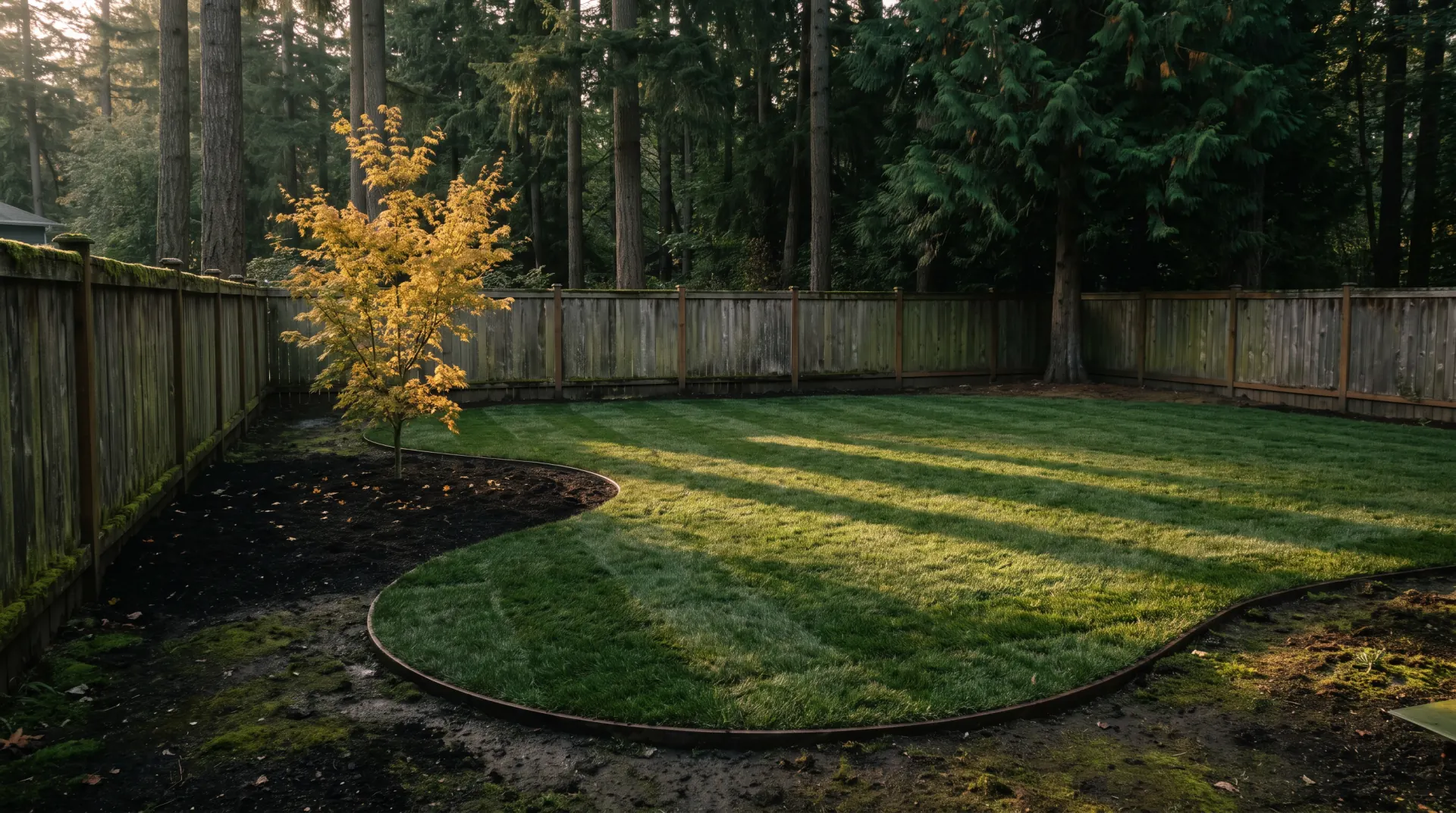
- New construction. Builder grade is often compacted fill. Once we've regraded and amended it, sod covers it before fall rains turn it into mud.
- Slopes. Seed washes downhill in the first heavy rain. Sod holds the soil from day one.
- Weed-heavy sites. A dense mat of sod gives weeds very little room to germinate.
- You'd miss the fall seeding window. Sod can go down any time the ground isn't frozen or bone-dry, though spring and fall are easiest on it.
When seed is the better choice
- Budget matters most. Seeding a large lawn costs a fraction of sodding it.
- Big areas with no rush. For acreage, side yards and back corners, seed is hard to beat.
- Shade. Most sod farms grow sun-loving blends. Seed lets us choose a fine-fescue mix that tolerates the shade under Douglas firs and big maples.
- Overseeding an existing lawn. If the lawn is thin rather than gone, aerating and overseeding in early fall is the cheapest fix there is.
Timing in the valley
Seed wants warm soil and reliable moisture. Late August through early October is ideal: the soil is still warm from summer, and the fall rains arrive to keep it damp. Spring seeding works too, but crabgrass germinates alongside it, and the new grass has to survive its first dry summer with shallow roots.
Sod is more flexible. Spring and early fall are best because the weather does some of the watering for you. Summer installs are fine with irrigation; just expect to water every day for the first couple of weeks.
Prep is the same — and it's most of the work
Whichever you choose, the result depends on what's underneath:
- Strip the old turf and weeds so the new grass isn't competing.
- Grade for drainage, sloping away from the house. On valley clay this is the step that stops puddles and moss later.
- Amend the soil with about two inches of compost, tilled into the top four to six inches.
- Rake smooth and roll, so the surface is firm and level.
Skip the prep and both sod and seed struggle. Do it well and either will give you a lawn that lasts.
Our take
For most front yards and family lawns on new builds, we recommend sod. It's more up front, but you get a finished, weed-resistant lawn right away, and you skip a season of babysitting seed. For large, shady or budget-sensitive areas, a properly prepped fall seeding is the smart call. Many yards get both: sod where people see it and use it, seed for the back.
Not sure which fits your yard? We'll measure, test the soil and give you a written price for both. Get a quote, or read more about our sod installation.